What Makes the Best Dropshipping Suppliers
Finding reliable dropshipping suppliers is one of the most consequential decisions an online store owner makes. The supplier you choose determines your product quality, your delivery times, your customer service workload and, ultimately, your margins. Yet many sellers treat supplier selection as an afterthought, picking whichever platform appears first in a search result and only discovering the problems once orders start coming in.
The best dropshipping suppliers share a set of practical characteristics. They hold or can quickly obtain the products you sell. They inspect goods before dispatch rather than shipping whatever arrives from the factory. They provide tracking that syncs back to your store automatically. They respond to problems with replacements or refunds instead of silence. And they are transparent about their fees, with no hidden charges buried in shipping costs or currency conversion.
This guide explains the main types of dropshipping suppliers, compares them honestly, and shows how an agent-based China dropshipping supplier fits into a modern ecommerce operation. It is written for store owners on Shopify, WooCommerce, Salla and similar platforms who want a supplier partner rather than a one-off transaction.
Types of Dropshipping Suppliers
Broadly speaking, sellers choose between three categories of supplier. Each has a legitimate place, but they solve different problems.
Marketplace Platforms
Marketplace platforms are large directories where thousands of independent sellers list products. They are easy to start with and require no relationship building, which makes them attractive to beginners. The trade-offs are familiar: inconsistent quality across sellers, variable shipping times, limited branding options and little accountability when something goes wrong. You are buying from whoever happens to fulfil the order, and the experience your customer receives reflects that randomness.
Wholesale Directories
Wholesale directories list suppliers, factories and trading companies, usually with contact details and product catalogues. They give you more choice and often better unit prices than marketplaces, but the burden of vetting falls entirely on you. You must verify the supplier, negotiate terms, arrange quality checks and manage shipping yourself. For sellers with time and sourcing experience this can work well; for lean teams it often becomes a second job.
Agent-Based Suppliers
A dropshipping agent sits between you and the factories. You send the product you want to sell, and the agent sources it, checks it, stores it and ships each order directly to your customer under your brand. The agent handles the operational complexity while you keep control of the product selection and the customer relationship. This model has become the default for serious Shopify dropshipping suppliers because it combines factory-level pricing with per-order fulfilment.
Marketplace Supplier vs Wholesale Supplier vs Dropshipping Agent
| Factor | Marketplace Supplier | Wholesale Supplier | Dropshipping Agent |
|---|---|---|---|
| Minimum order | Usually none | Varies; often high per SKU | No MOQ |
| Product sourcing | Limited to listed catalogue | Catalogue plus some custom requests | Sourced on request from factories and markets |
| Quality control | Rarely inspected | Possible but you must arrange it | Included before dispatch |
| Branding | Not available | Sometimes, with volume | Custom packaging, inserts and logos available |
| Stock holding | Supplier's own stock | You buy and store inventory | Warehousing at the agent's facilities (first 30 days of storage free) |
| Order handling | Manual, per marketplace | Manual, per supplier | Automated app sync plus per-order picking and packing |
| Accountability | Low | Medium | Dedicated account manager |
The pattern is clear. Marketplaces optimise for ease of entry, wholesale directories optimise for unit price at volume, and agents optimise for control and consistency per order. Most growing stores eventually move toward the agent model because it removes the operational ceiling that the other two impose.
What an Agent-Based China Dropshipping Supplier Does Differently
A China dropshipping supplier operating as an agent works from inside the supply chain rather than at arm's length from it. That proximity changes what is possible.
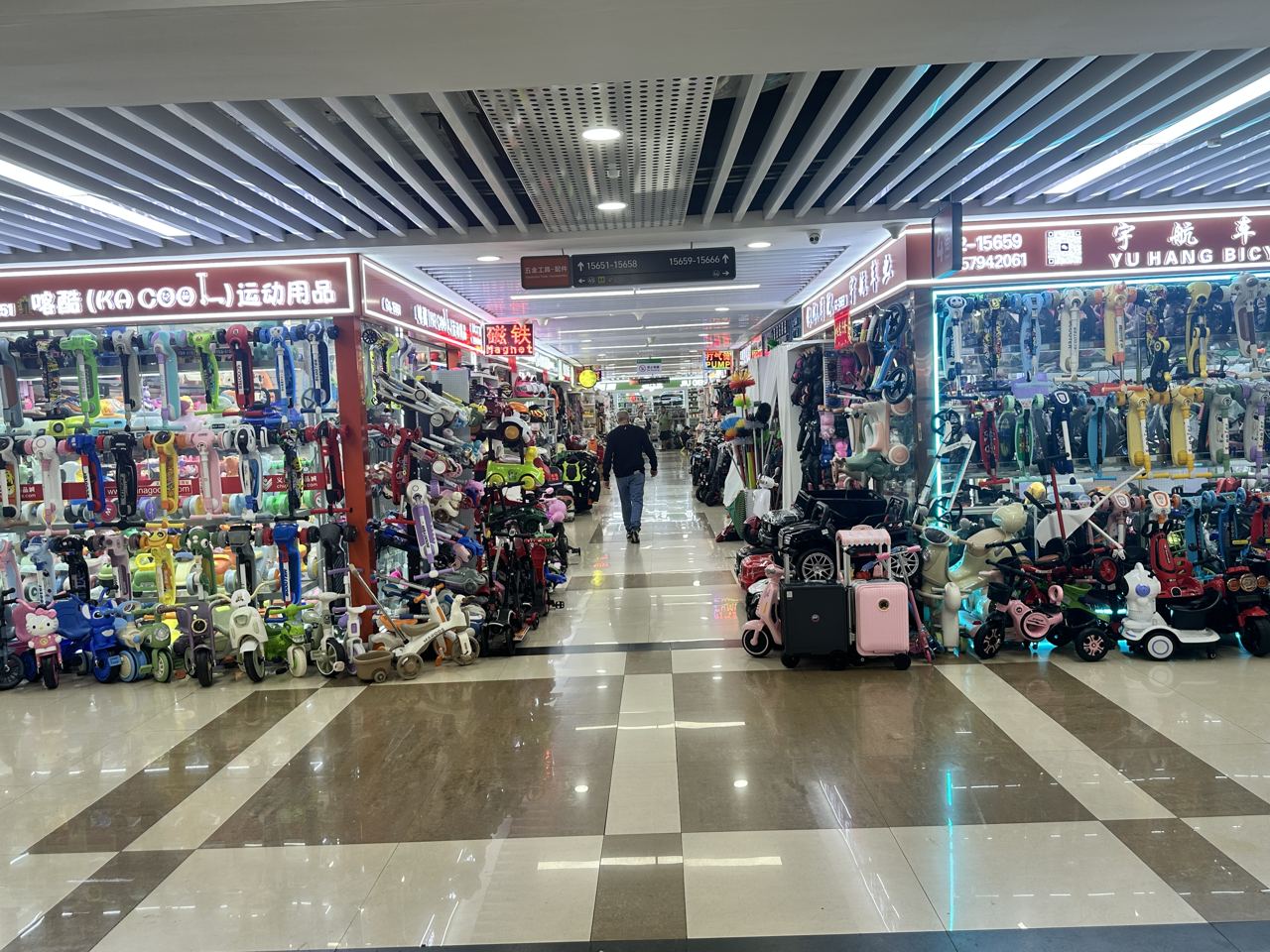
Sourcing from Yiwu market. Products are sourced from Yiwu International Trade City and the manufacturing belts around Yiwu, including Jinhua, Yongkang, Pujiang and Dongyang. This is one of the densest concentrations of small-goods manufacturing and trading in the world, which means a wide product range and competitive factory pricing. You describe the product you want; the agent finds it, negotiates the price and sends you a quote.
Quality checks. Every order is inspected before it leaves the warehouse. This is the single biggest difference between an agent and a marketplace order, where the item ships straight from a seller you have never spoken to. A quality check catches the defects, wrong variants and damaged packaging that otherwise become refund requests and negative reviews.
Branding. Custom packaging, thank-you inserts and product logos are available so the parcel your customer opens carries your store's identity, not a generic supplier's. Branding carries a minimum quantity and a separate customisation fee, which your account manager can quote precisely for your product.
Stock holding. The agent warehouses your products, so repeat orders ship immediately rather than waiting on a fresh factory run. Storage is free for the first 30 days at both the China and US warehouses, and quoted on request beyond that.
Per-order fulfilment. Picking, packing and labelling are handled per order, with direct shipping to the end customer and tracking synced back to your store automatically. Tracking numbers can be issued in advance, which helps when customers ask for updates before dispatch.
US Dropshipping Suppliers and Fast Delivery
Delivery speed is a conversion factor, not just a logistics detail. US dropshipping suppliers that ship from within the United States let you promise short delivery windows to American customers, and that promise shows up in lower cart abandonment and fewer "where is my order" messages.
What matters is whether your supplier has a genuine US warehouse presence rather than a partner who merely forwards parcels. With a US warehouse in the fulfilment chain, orders dispatched domestically arrive in 2-5 days. Orders shipped directly from China to the US take 8-12 days in peak season, so the domestic option is meaningfully faster when speed is the priority. Overseas warehouses are also available in Japan, Australia, Germany, Spain, Poland, Canada, France, Belgium, Czechia and the UK, which gives sellers in those markets the same advantage.
A practical approach is to hold your best-selling lines in the US warehouse while sourcing new or long-tail products from China. You get fast delivery on the products that drive revenue and full sourcing flexibility on everything else, without committing to inventory you may not sell.
How to Evaluate a Dropshipping Supplier: A Checklist
Before you commit volume to any supplier, work through these questions.
- Minimum order quantity: Can you test a product without buying inventory? A no-MOQ policy lets you validate demand before spending.
- Quality control: Is inspection included, or do you pay extra or arrange it yourself?
- Pricing transparency: Are product cost, shipping and handling fees stated clearly and separately?
- Sourcing speed: How quickly do you receive a quote after requesting a product?
- Dispatch time: What is the stated dispatch window for in-stock items and for items that must be sourced?
- Delivery times: Are there domestic warehouse options for your main market?
- Tracking: Does tracking sync back to your store automatically, and can numbers be issued in advance?
- Branding: Can you ship in your own packaging with your own inserts?
- After-sales policy: What happens when a parcel is damaged or lost?
- Support: Do you have a named contact, or only a ticket queue?
- Platform integration: Does the supplier connect natively to your store platform?
How This Service Works as a Supplier Partner
The Dropshipping Agent, operated by Mutual Dropshipping, is a professional dropshipping agent based in China. The model is built around per-order fulfilment with no minimum order quantity. You pay only the product cost, the shipping cost and a per-order handling fee of US$0.50, US$0.75 or US$1.00 depending on the product. The app and quality checks are free, there is no subscription fee, and storage is free for the first 30 days at the China and US warehouses (storage beyond 30 days is quoted on request).
The workflow runs in a straight line: product sourcing, quality check, warehousing, per-order picking, packing and labelling, direct shipping to the end customer, and tracking synced back to your store automatically. Sourcing quotes are completed the same day (China time) for customers who have placed at least one order; inquiries without an order take about 24-72 hours. Orders for products already in stock ship within 1 day, while orders needing sourcing first ship within 3 business days after payment. Damaged or lost parcels are reshipped free or refunded, except where the recipient address provided was wrong.
Shopify, WooCommerce, Salla and Lightfunnel stores connect through the app for automatic order sync, and CSV or Excel manual ordering is supported for everything else. Our Shopify App Store app, MutualDropshipping, has been live since May 2022 and is rated 4.6–4.7 on the Shopify App Store (rating checked 21 October 2026). Sourcing and a dedicated account manager are activated once you have placed at least one order, and you can reach that manager directly for quotes, orders and after-sales. To start a conversation, email info@mutualdropship.com.
Frequently Asked Questions
Do I need to order a minimum quantity to work with a dropshipping agent?
No. There is no minimum order quantity, so you can test a single product with a single order. Sourcing and your dedicated account manager are activated after your first order is placed, which means you can validate demand before committing to volume.
How fast will orders reach my customers?
Orders for products already in stock ship within 1 day. Orders that require sourcing ship within 3 business days after payment. Shipping from China to the US takes 8-12 days in peak season, while orders dispatched from the US warehouse arrive in 2-5 days. Overseas warehouses in Japan, Australia, Germany, Spain, Poland, Canada, France, Belgium, Czechia and the UK serve other markets.
Can I ship orders in my own branding?
Yes. Custom packaging, thank-you inserts and product logos are available, so parcels reflect your store rather than a generic supplier. Branding carries a minimum quantity and a separate customisation fee, and your account manager can confirm the exact figure for your specific product.